Winter 2026 Newsletter
250th Anniversary Battle of Moores Creek
The Battle of Moores Creek occurred on February 27, 1776. It was the first N.C. battle in the American Revolution, the Lexington and Concord of the South.
Recent Scottish Highlanders had taken oaths of loyalty to the Crown as a condition of immigration. Some had fought for the successful British in the recent French and Indian War and pride, smashed at Culloden, was bolstered by magnificently kilted and piped Highland regiments now embraced by the Crown.
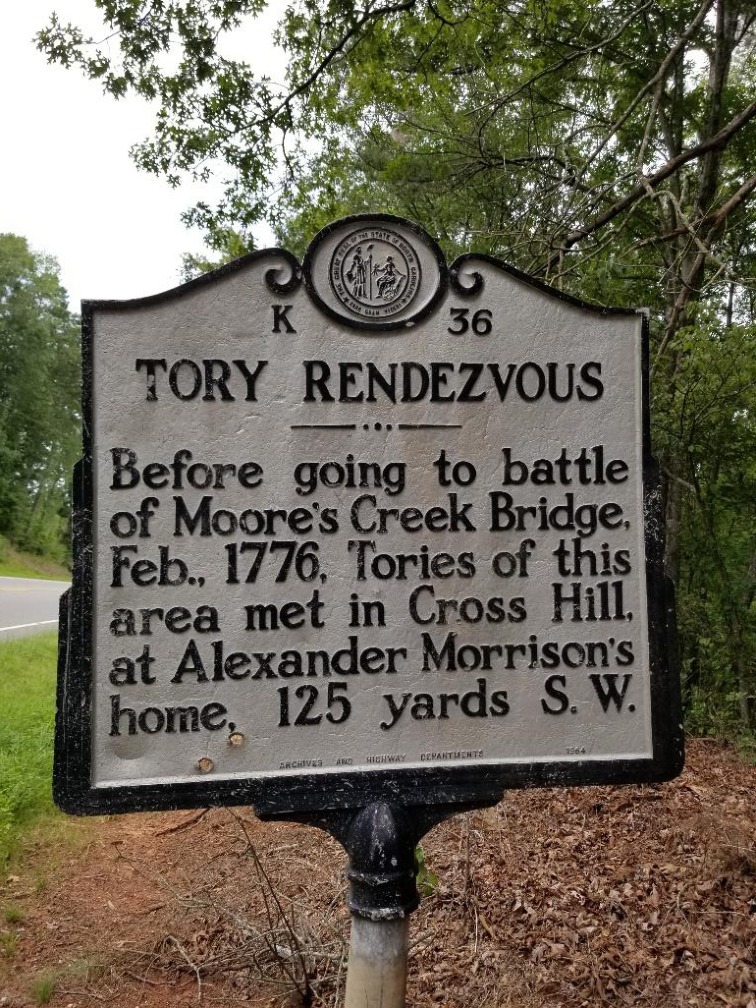
Tory (Loyalist) rendezvous marker near Carthage.
As fighting snarled in the North, safety committees and militias in N.C. were formed in defiance of the Royal colonial government. Gov Josiah Martin, in exile, called for all loyal subjects to serve as troops. The Royal Standard was raised in Cross Creek (Fayetteville) and 1600 Highland Scots and loyalists mustered. The loyalists were led by Brig. Gen. Donald McDonald and Lt. Col. Donald McLeod who were sent to N.C. to raise Highland troops. Their goal was to cross the Cape Fear River and join British forces at Brunswick Town in the mouth of the Cape Fear.
Col James Moore, commander of the patriot militias in SE N.C., trailed McDonald and the loyalists and repeatedly blocked the river crossing.
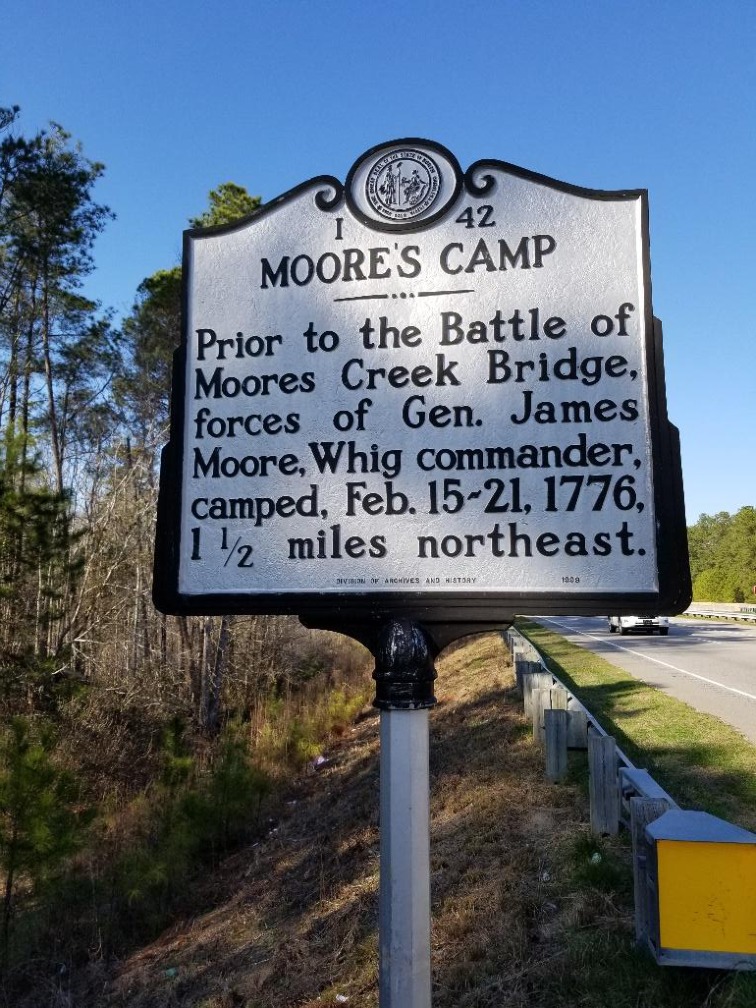
Col. James Moore militia camp blocking loyalist crossing of Cape Fear.
Militias led by Richard Caswell and Alexander Lillington assembled on the banks of Moore’s Creek, a logical crossing point to Wilmington 20 miles away.
McDonald was ill and McLeod was in command as the loyalists went after the militias they thought were retreating. The planks on Moore’s Creek bridge were removed and the girders greased. At daybreak on a cold day in a swampy wilderness the loyalists, with broadswords leading the charge, met a quick disaster. McLeod and at least 50 loyalists were killed, McDonald and 859 more taken prisoner and the rest disappeared into the wilds.
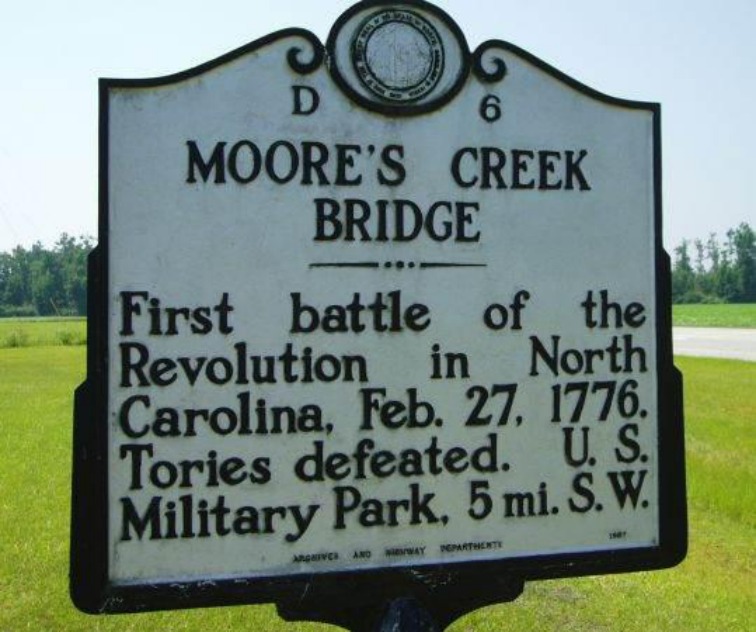
Moores Creek Bridge Battlefield marker.
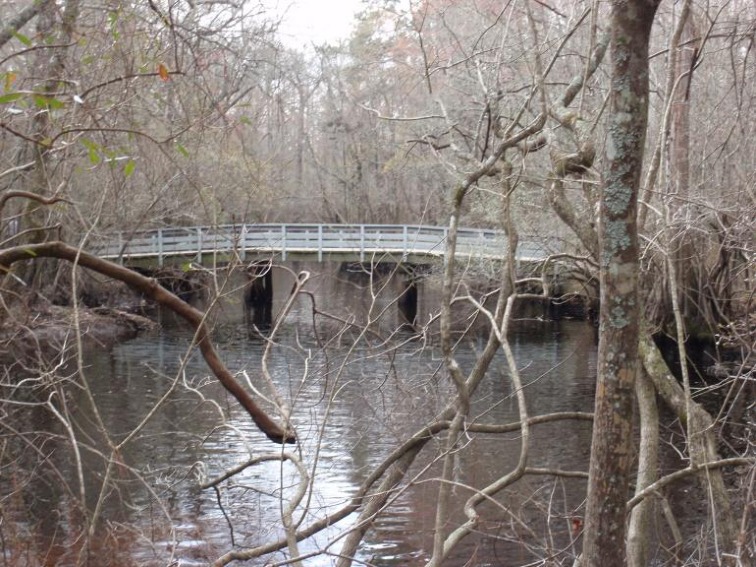
Current Moores Creek Bridge.
Why was this battle important? It marked the permanent end of Royal authority in N.C. In less than two months the Provincial Congress met in Halifax and instructed the N.C. delegation to the Continental Congress in Philadelphia to vote for independence (The Halifax Resolves). Strategically it prevented the British from controlling the South at the onset of the Revolution.
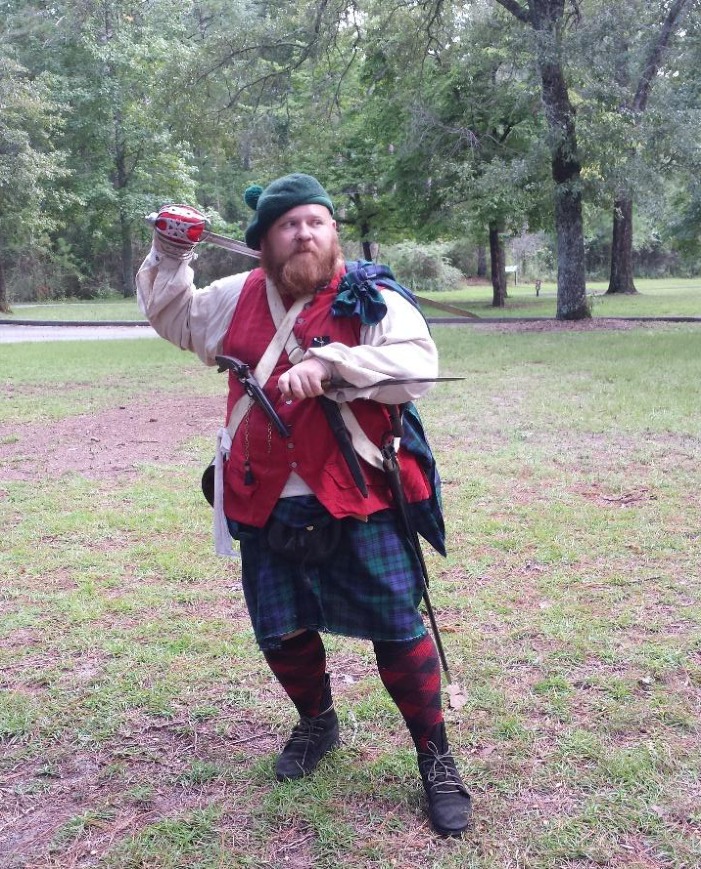
Loyalist reenactor (there was a piper but no kilts probably).
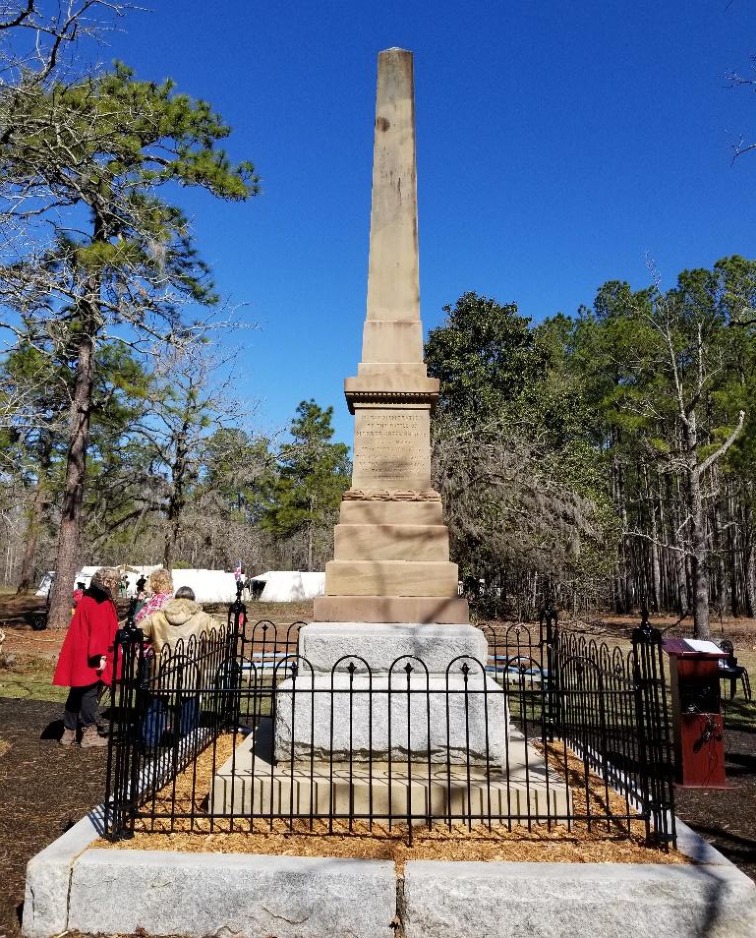
Patriot monument to James Grady, the only patriot who died due to battle.
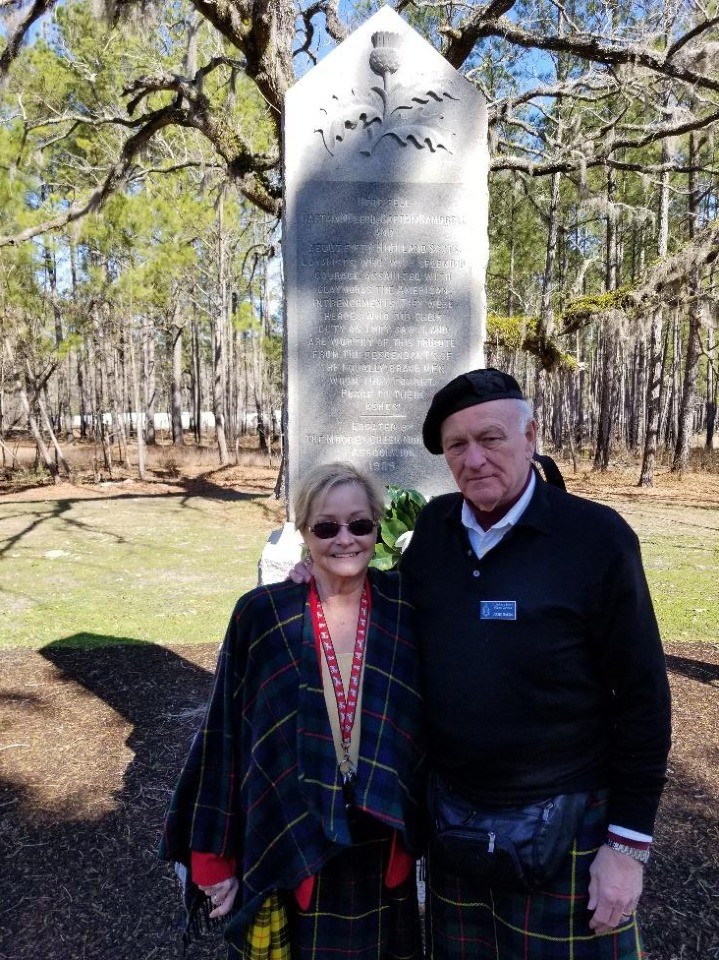
Loyalist monument. Debra McCloud, president of Cape Fear Valley Scottish Clans, and Donald McLeod.
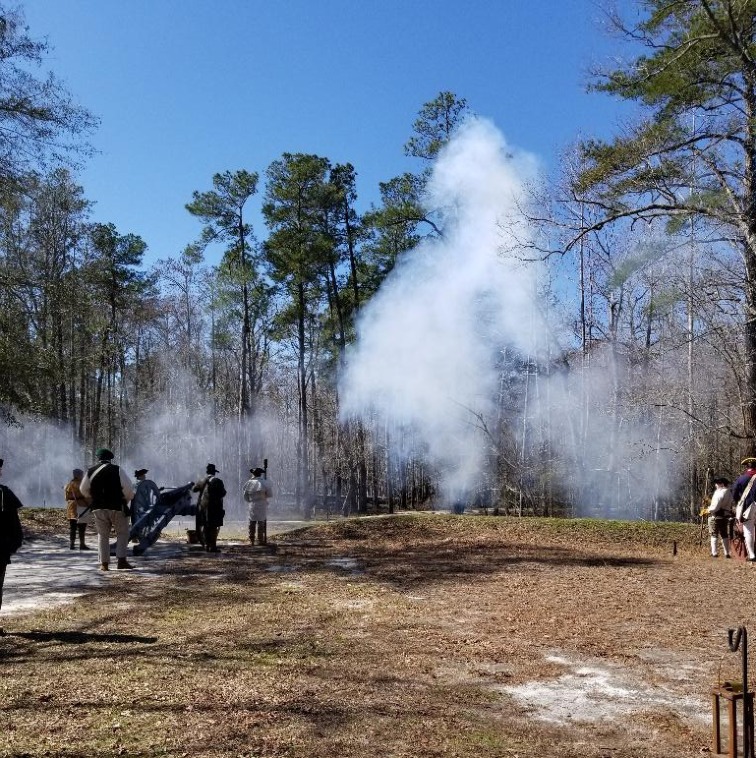
Patriot cannon affectionately known as “Mother Covington.”
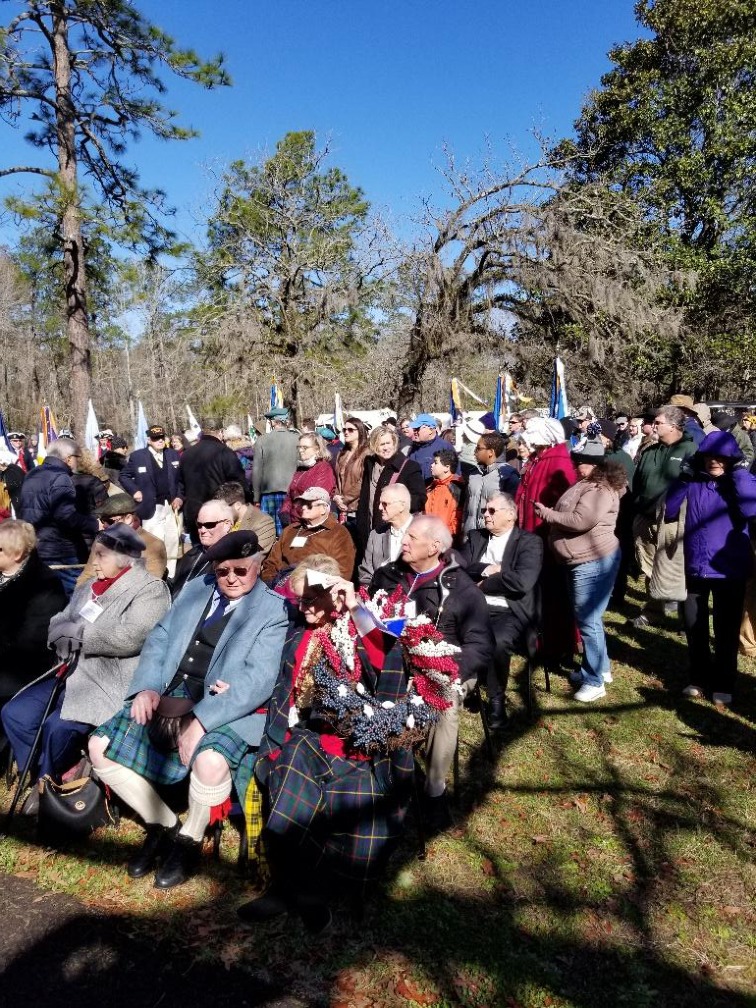
Wreath laying ceremony.
The Moore’s Creek Battleground Association is open to membership and information is available from the secretary at lairdpm@yahoo.com. Hundreds of enthusiasts attend the anniversary celebration each year. Make your plans to attend the 250th this February.
Cape Fear Scottish Immigration Memorial Dedication
Thanks to the Scottish Society of Wilmington six years ago, the Cape Fear Scottish Immigration Memorial Fund was established and has now completed its first leg of an envisioned N.C. Scottish Trek. On November 14 the Memorial Cairn was dedicated, with perhaps 200 attendees, at the Brunswick Town/Fort Anderson State Historic Site. The setting is historic where at least 20,000 Scots, mostly Highlanders, sailed into the Cape Fear and became North Carolinians in the period 1739-1800. Fittingly, the Cairn is surrounded by ballast stones from the many ships that sailed from Scotland. This is the first of many sites being identified in the Scottish Trek from the coast to the mountains in NC.
The Saint Andrew’s Society of NC was a major contributor to the Memorial Fund and is recognized at the site. Memorial paving stones can be purchased by individuals or organizations (capefearscotsmemorial.org).
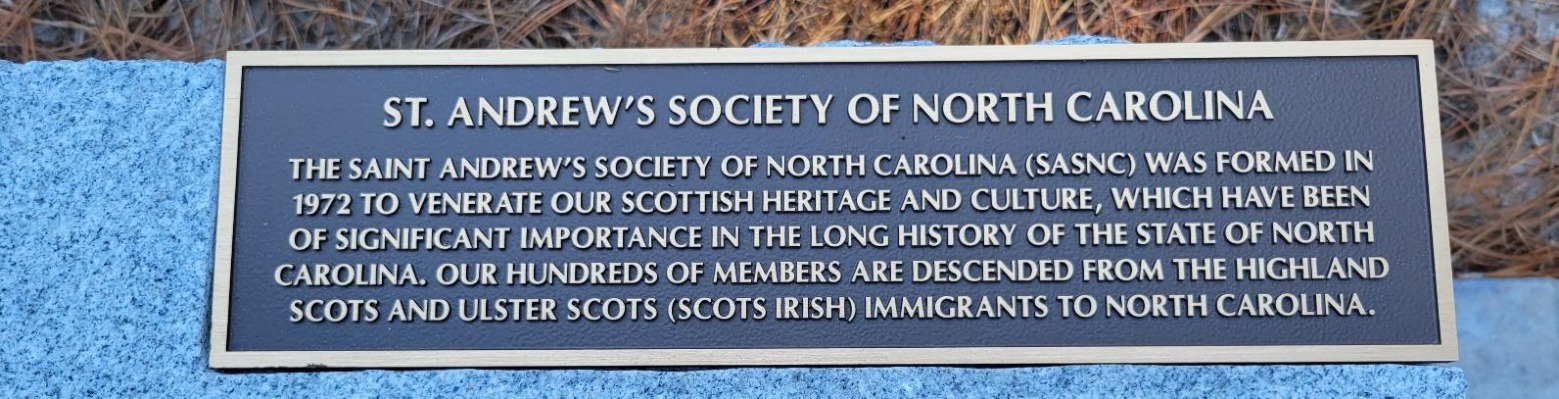
St. Andrew’s Society of North Carolina plaque at the memorial.
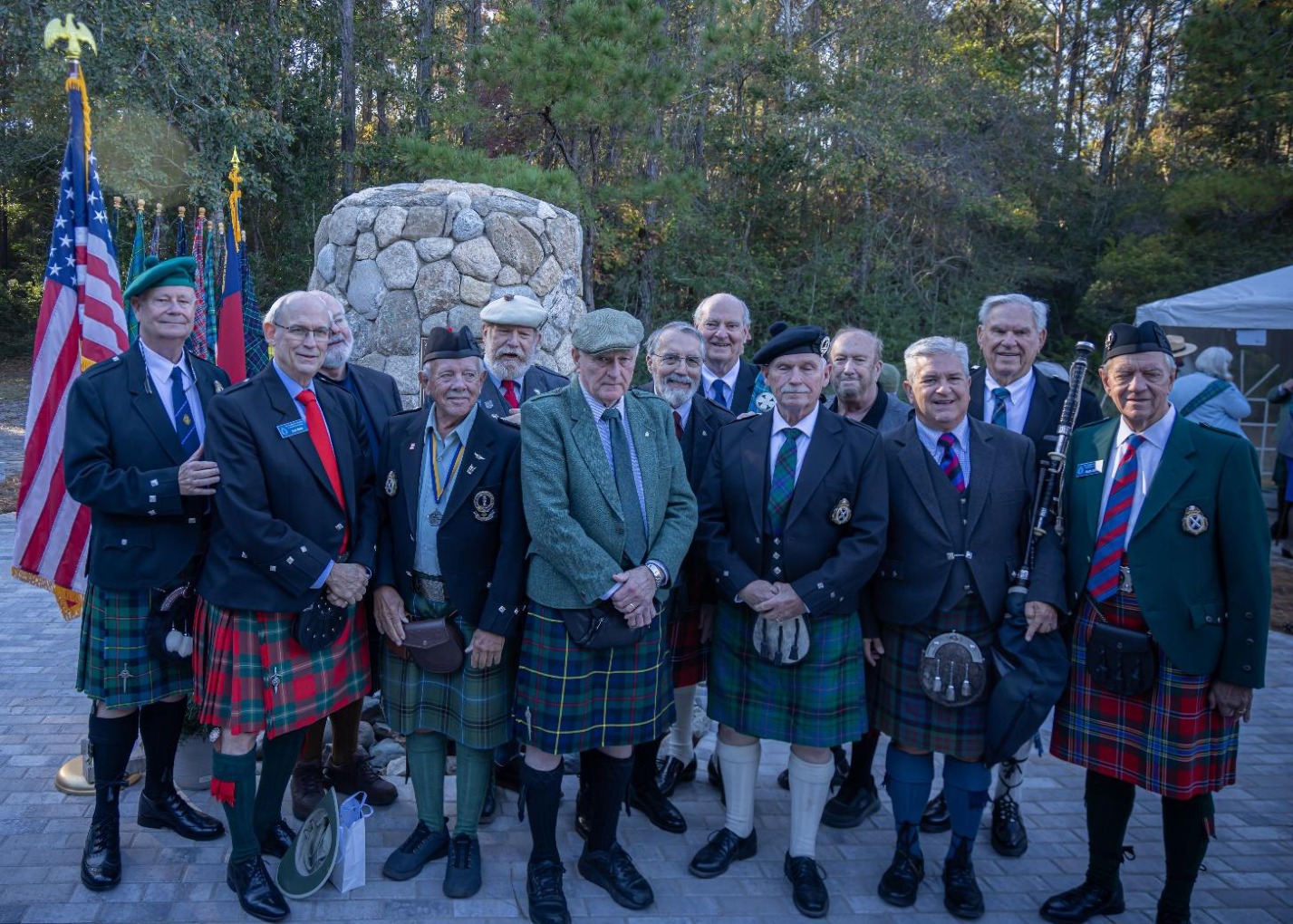
St. Andrew’s members at dedication of memorial.
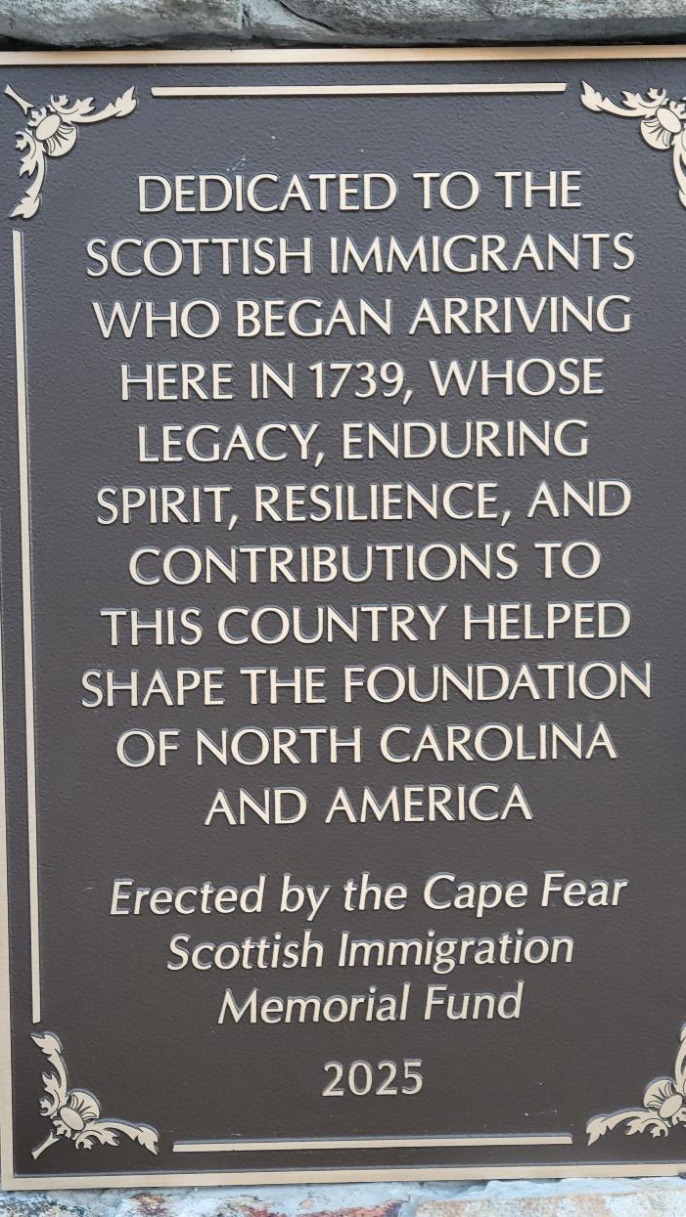
Memorial cairn dedication plaque.
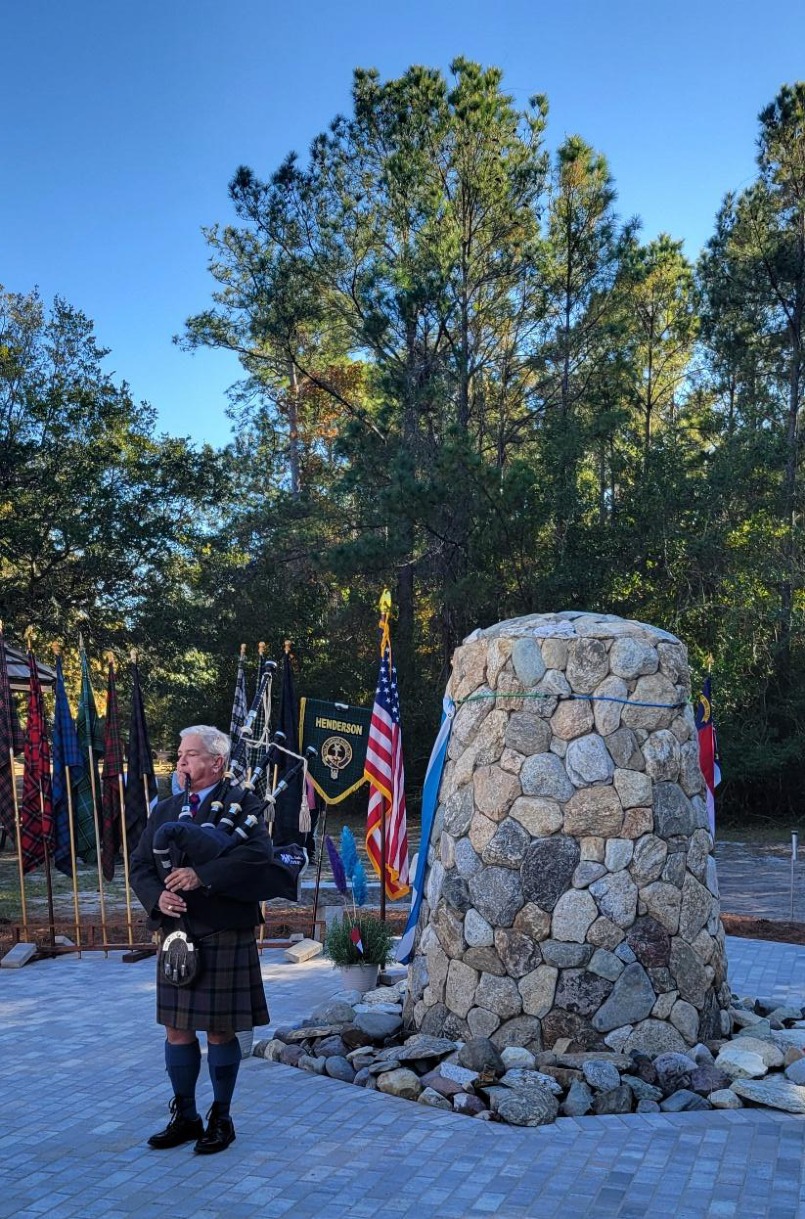
Bill Caudill, piper at memorial cairn.
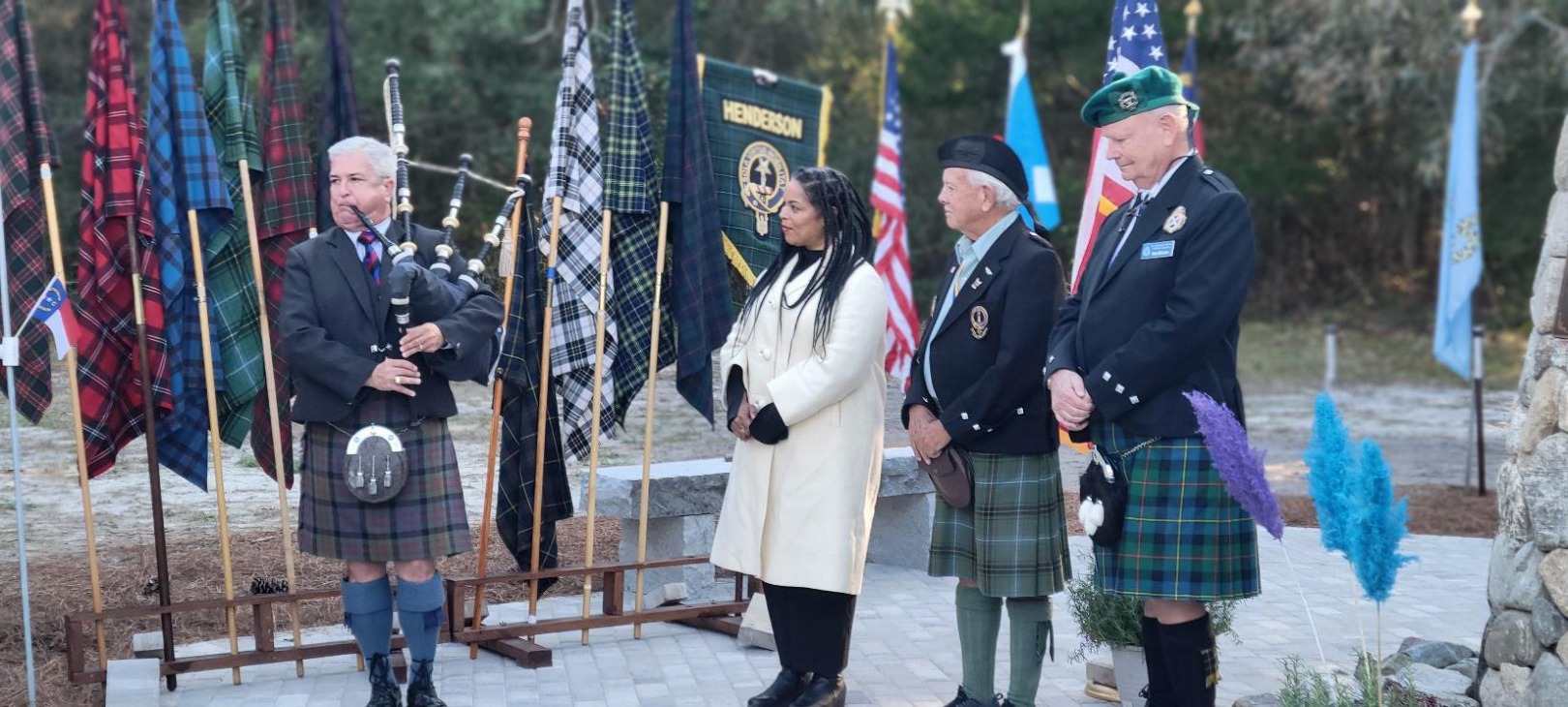
Michelle Lanier, NC Department of Cultural & Natural Resources, Leon Hicks & Bob McLeod.
Historic Black River Presbyterian Church
Black River Presbyterian Meeting House was founded about 1740 by Scottish Highlanders from the Isle of Arran who had arrived in the Cape Fear in 1739 (Argyll Colony).
A number of preachers supplied the church, including Rev. James Tate who came to Wilmington in 1760 and had opened its first classical school.
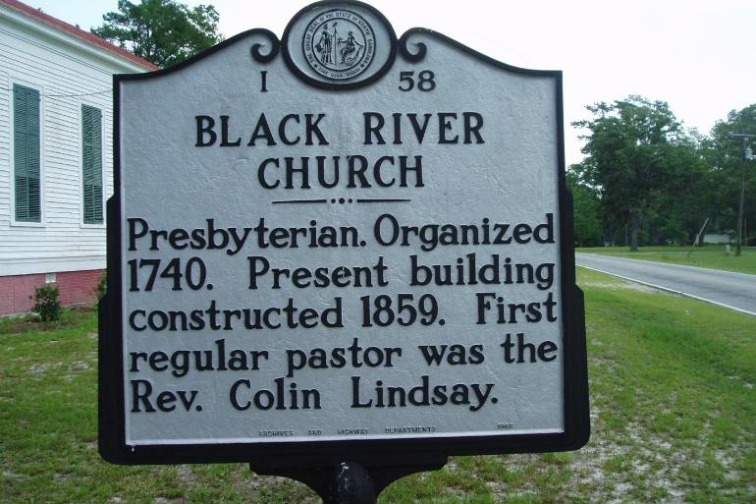
Black River Church historical marker.
Finally in 1788 the Rev. Colin Lindsey organized the Presbyterian congregation and ordained the elders. Lindsey soon became controversial, as in numerous other churches, and left for Raft Swamp P.C. near Red Springs.
The longest serving pastor was Rev. Robert Tate, 1799-1834. A Temperance Society was organized during this time due to a spirit of worldliness on the Black River.
Several prominent Americans trace their ancestry to Black River, including Dr. Edwin Alderman and Charles McIver (education) and numerous Murphy physicians. President Woodrow Wilson’s father, pastor of First Presbyterian Church in Wilmington, occasionally served at Black River.
(Source: Dudley H.J.: A History of Presbyterianism in NC.)
Local congregation members Hans Rohr, Dean Johnson and Harold Corbett will welcome the NCPHS.
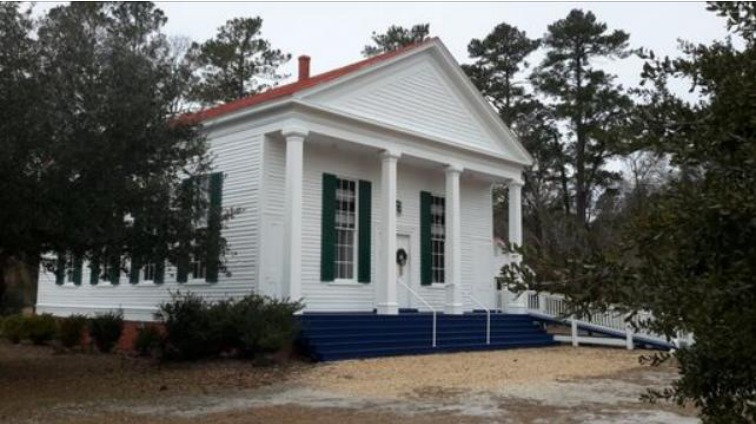
Black River Presbyterian Church.
Business Meeting and Program - February 27, 2026
Marriott Medical Park, after dinner, 7:00 pm
- Steve McRae, Chairman, Business Meeting
- Bob McLeod, Creation of the Scottish Immigration Memorial
- Don McLeod, John Bethune: Chaplain to the Loyalists at Moores Creek and Father of Presbyterianism in Canada