Fall 2025 Newsletter
Hopewell Presbyterian Church

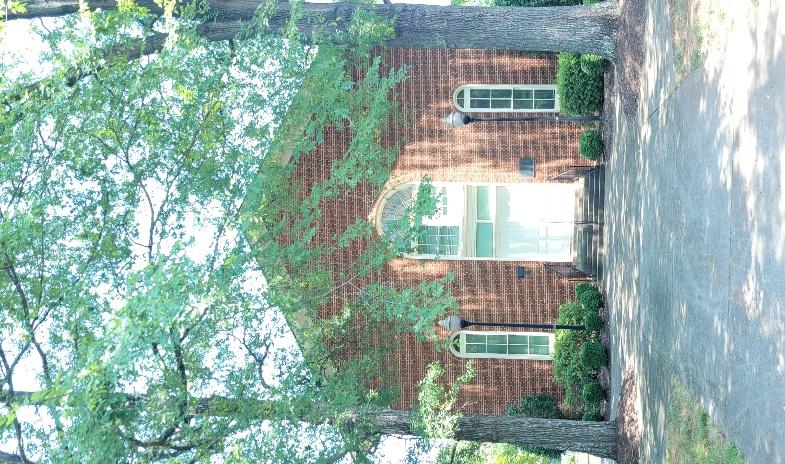
Hopewell Presbyterian Church.
The origins of Hopewell P.C., located in Huntersville near Charlotte, goes back to circa 1750 when John Thompson, a Presbyterian missionary, preached at several sites south of the Yadkin River. The preacher Alexander Craighead was responsible for the first meeting house (church), a log cabin in 1765. In 1746, New Side Scots-Irish Presbyterians, favoring a more dramatic and passionate church, founded the College of New Jersey, now Princeton University. Craighead was a New Side zealot and is considered the father of several Charlotte area churches, each populated largely by Scots-Irish settlers who predominately arrived by the Great Philadelphia Wagon Road.
Thyatira Presbyterian Church.
Cotton brought great prosperity to the congregation, and a brick sanctuary was built in 1831, which remains as the core of the church property. The church’s magnificent cemetery contains the graves of many of Mecklenburg’s most notable pioneers, including esteemed General William Lee Davidson, killed at the Battle of Cowan’s Ford in the Revolution. A magnificent stone wall surrounds the church. Hopewell continues as an active, vibrant Presbyterian community.
Hopewell P.C. History, Prof. Dan Morrill, UNC Charlotte, 1987
Presbyterians Bring American Revolution to Charlotte
The N.C. Piedmont was settled in the mid-1700s largely by immigrants traveling the Great Wagon Road from Pennsylvania, Maryland and western Virginia. These included Quakers, German Lutherans, Moravians and especially Presbyterian Scots-Irish (Ulster Scots). A leading figure in the Charlotte area rebellion was the fierce Covenanter-styled preacher Alexander Craighead. Craighead founded or aided the formation of seven pre-Revolution Presbyterian churches in the Charlotte area: Rocky River, Sugaw Creek, Hopewell, Centre, Poplar Tent, Steele Creek and Providence, the so-called Seven Sisters. The only authority Craighead bowed to was Almighty God and Jesus Christ, certainly not the British Crown. His hatred of the Crown was near psychotic. As the Revolution proceeded, local Presbyterians would play critical roles in Charlotte being called the “hornets’ nest” by the British general Lord Cornwallis.
Several important battles occurred in the Charlotte region, including Kings Mountain, Cowpens, the Waxhaws and patriot-loyalist skirmishes at Ramsour’s Mill, Colson’s Mill and Hanging Rock. Leading patriot military figures were General William Lee Davidson, Col. William R. Davies and General Griffith Rutherford. At the time of the Battle of Charlotte in September 1780, the town consisted of about 20 houses, a courthouse, a tavern and intersecting roads, now Tryon and Trade streets.
Retired Col Thomas Phlegar, a Revolutionary War reenactor.
Mecklenburg Declaration of Independence
On the N.C. state flag there are two dates. One is April 12, 1776 which recognizes the Halifax Resolves, passed unanimously by the Fourth Provincial Congress of N.C., and authorizes its delegates to the Continental Congress to declare independence from Great Britain. The Resolves were in rapid response to the Battle of Moores Creek where patriot militia quickly defeated loyalist militia composed largely of Highland Scots. N.C. was the first state to declare its support for independence from Great Britain.
The second date is May 20, 1775 which recognizes the creation of the Mecklenburg Declaration of Independence (Meck Dec). A group of 28 mostly Scots-Irish Presbyterians, local leaders in the Charlotte area, convened and dispatched copies to N.C. delegates to the Continental Congress in Philadelphia. The original copy was destroyed when the home of John McNitt Alexander burned. The controversy of authentication still smolders, although Charlotte just celebrated the 250th Meck Dec anniversary. An essential book on the controversy is David Fleming’s Who’s Your Founding Father. After reading you will be convinced of the Meck Dec existence. President John Adams even accused Thomas Jefferson of plagiarism in composing the July 4, 1776 Declaration!

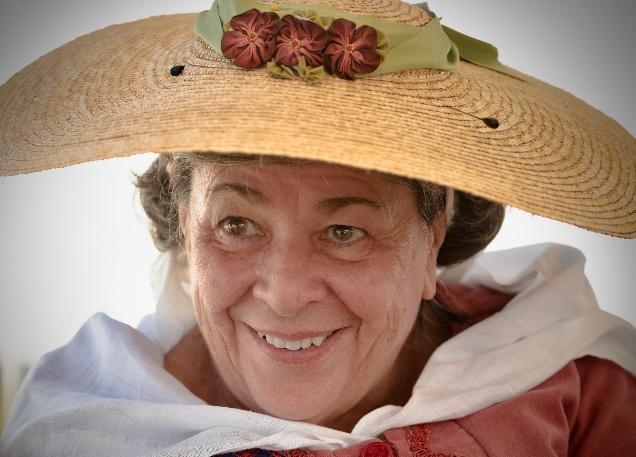
Sarah Sue Hardinger, an experienced Revolutionary War speaker and reenactor.