Summer 2023 Newsletter
West Raleigh Presbyterian Church, Raleigh NC
West Raleigh was chartered in May 1927 to serve over two hundred students and about 40 professors and other employees of NC State. The majority of the first 60 plus members came from First Presbyterian. Two of those visionaries were the much-loved professor of English, Dr. T.P. Harrison, and long-time Dean of Students, E.L. Cloyd.
The congregation met in buildings on NC State’s campus until a sanctuary was built at the church’s current location—land that only a decade earlier had been part of the old state fairgrounds—was built. The current sanctuary was dedicated in 1952, and the education building was built in 1960.
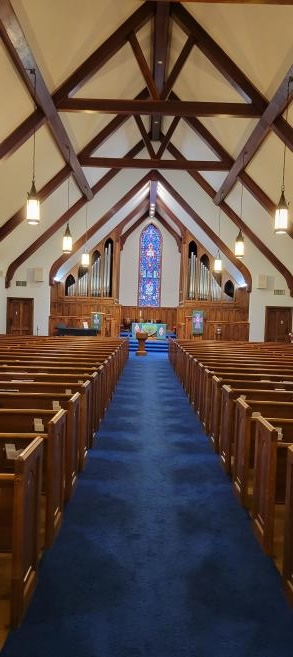
Sanctuary of West Raleigh Presbyterian Church
West Raleigh has long had a concern for issues of equality and justice. In 1963, the Session voted that race would never be considered in requests for membership. Around the same time, West Raleigh’s pastor and elders visited all restaurants on nearby Hillsborough St. and persuaded them to open their businesses to persons of all races.
In 1968, the church expanded its kindergarten into an accredited multi-racial, multicultural child care center—the first in Raleigh, and the first state-qualified day care in Raleigh. West Raleigh was also the first Presbyterian church in Raleigh to elect and ordain a female elder, Sibyl Pierce. The Rev. Harriet Isbell became the first female minister in an installed position in a Presbyterian church in Raleigh when West Raleigh called her as associate pastor.
In 2014, West Raleigh became an Earth Care Congregation, committing itself to taking specific actions to care for creation. In 2020, West Raleigh became a Matthew 25 Congregation, committing itself to building congregational vitality, dismantling structural racism and eradicating systemic poverty. And in 2021, West Raleigh became a More Light Congregation, committing itself to full inclusion and welcome of all God’s people. As West Raleigh approaches its centennial, the congregation eagerly anticipates the ways in which God will call the church to serve and to witness.
Historic Oberlin Village Turner House Museum
Oberlin was no ordinary freedmen town, but an antebellum free Black enclave that grew into an African American municipality built away from White supervision. Oberlin provided a legacy of freedom and land ownership and a Black settlement with home ownership, artisanal pride and an irreproachable reputation. The Turner House highlights achievements within the Oberlin community.
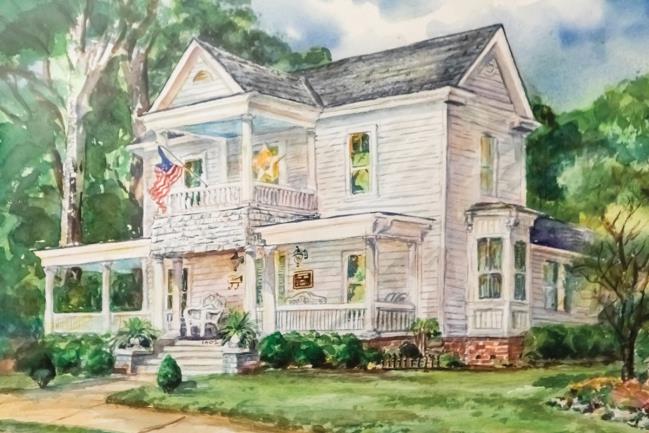
Turner House Museum in Oberlin Village
The historic Turner House Museum in Oberlin Village preserves this important history.