Winter 2022 Newsletter
A Journey Back In Time: Early Granville and Vance Counties
Oxford Presbyterian Church in the lively county seat of Granville County was organized in 1818, just two years after the establishment of the town, by members from Grassy Creek (est. 1755). Services were held at the Oxford Academy until 1830 when a building was completed. The present building was built in 1892, and they have a wonderful hand-built organ. The congregation spent 2018 celebrating its 200 years of history.
In 1860 the Oxford congregation included 12 African Americans communing members. But by 1888 only one remained, Mrs. Harriette Howell. That summer George Shaw, a visiting African American student from Auburn [Presbyterian] Theological Seminary in New York, was surprised that a town with so many Negro citizens (56%) had no black Presbyterian church. With the help of Mrs. Howell, he organized one and became its minister. It was named Timothy Darling Presbyterian Church for one of his professors at Auburn.
The next year a school was started at the church, since the black children in town had no advanced schooling. Almost right away, George Shaw began building a boarding school with strong support from his friends at Auburn Seminary, especially Mrs. Mary Potter, and also the Presbyterian (PCUSA) Board of Missions. For many years it was the only high school for African American students in Granville County. It had high standards and drew many students from out of state. Although the name changed a few times over the years, it was generally known as the Mary Potter Academy. Its closing in 1970 was a great blow to the community. Shaw’s home is now a museum in Oxford.
Nutbush Presbyterian Church in Townsville, Vance County, is in an area settled by the earliest Scotch-Irish immigrants, who moved south from Virginia into the eastern part of North Carolina when the French and Indian War was being fought to the west. Presbyterians at Nutbush, Grassy Creek, Red House, and along the Hico River were among those who gathered to hear Hugh McAden on his missionary journey through North Carolina in 1755-56. The congregations have traditionally dated their beginnings from then, but Nutbush and Grassy Creek were officially organized with ordained elders in 1765 by Rev. James Creswell. Creswell served both churches as well as Lower Hico until sometime between 1772-74.
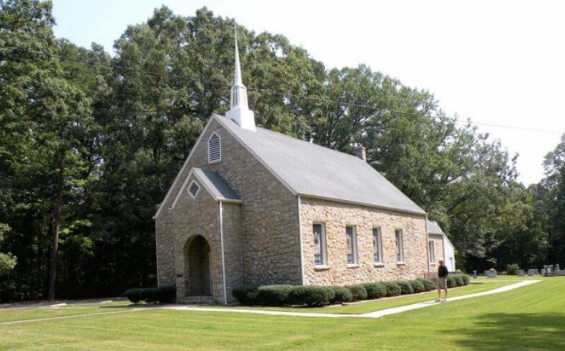
Oxford Presbyterian Church
Henry Pattillo (1726-1801)
The Rev. Henry Pattillo served at Nutbush and Grassy Creek in his later life, from the age of 54 until his death at 75. But he had had a colorful life before then. Coming from Scotland in 1740, he taught school in Virginia and began to study for the ministry under the Rev. Samuel Davies. Ordained in 1758, he came to Orange County, NC, in 1765 to serve the Hawfields, Eno, and Little River churches. He also began a very successful classical school in his home. In 1768 during the War of Regulation, he and several other Presbyterian ministers were against the uprising and urged a peaceful solution with Governor Tryon. In return, Tryon asked him to preach to his troops on a Sunday. By 1774, however, Pattillo left his churches to teach in Bute County and supported the Patriot side. He was elected to the third Provincial Congress in 1775 and was appointed to a committee to persuade former Regulators that the oath of loyalty Tryon had forced them to take was not morally binding and did not prevent them from fighting for independence from Great Britain! He also became a member of the Halifax District Provincial Council. He continued to teach and supported establishment of other academies.
In 1780 he accepted a call to the churches of Nutbush and Grassy Creek. In 1784 the members gave him a farm on condition he stay with them to the end of his life, which he did. During that time he published three works.
Old St. John’s Episcopal Church is a beautiful church building that no longer has a congregation. It was built by the established Church of England in 1773 and originally called St. Peters. By law the landowners in each county elected a parish council to build a house of worship and to care for the poor. After the Revolution, there were no Church of England or Episcopal priests in the county and the building was used for public meetings and secular entertainments. It was reconsecrated in 1825 as St. John’s, but in the 20th century it fell into severe disrepair. In the 1950s it was beautifully restored and is now used for special services. The colonial interior has almost entirely survived, with its box pews and elevated pulpit.
News from the Presbyterian Heritage Center, Montreat
This year it has been 125 years since the founding of the Mountain Retreat Association by John C. Collins, a Congregational minister from New England. He purchased 4000 acres near the community of Black Mountain to create a religious retreat for church members in the North Carolina mountains. A hotel and a few cabins were built but it was not a financial success. In 1906 the property was purchased by the Synod of North Carolina for a Presbyterian retreat center. It continued to struggle financially until Robert Campbell Anderson was appointed in 1911 as administrator. Anderson initiated a highly successful capital campaign, a promotional compaign, added buildings, held training conferences for missionaries, and started the Montreat Normal School which became Montreat College.
A new exhibit at the Presbyterian Heritage Center tells the story of the Mount Mitchell (Logging) Railroad, 1911-1921. Documents and photographs are supplemented by an operating model of the railroad passing from the sawmill in Black Mountain through part of Montreat’s property.
The Inklings conference “From Shakespeare to the Inklings: The Bible’s Impact on the Creative Imagination” featured world-renowned speakers from England and across the United States. The Inklings were an informal literary discussion group associated with J.R.R. Tolkien and C.S. Lewis. On display during the conference were illustrated manuscripts and early printed material, including an early folio of Shakespeare’s plays (1630) and the first printing of the King James Bible (1611).
Historic Churches Celebrating Anniversaries in 2022
The following churches celebrated significant anniversaries of their founding in 2022:
225 years Old Laurel Hill Presbyterian Church, Laurinburg
200 years Bethlehem Presbyterian Church, Mebane
150 years First Presbyterian Church, Durham Oak Forest, Asheville
100 years Turner Presbyterian Church, Monroe Collinstown Presbyterian Church, Westfield, Stokes County Tryon Presbyterian Church, Tryon Buladean Presbyterian Church, Bakersville, Mitchell County
Congratulations to all of these congregations! This anniversary year is a great time for each of you to begin or update the history of your church. It is truly worth recording the heritage on which you build. The records and the memories are too easily lost.
Old Laurel Hill, outside Laurinburg, celebrated its 225th anniversary.
First Presbyterian Church, Durham, was organized on New Year’s Eve, 1871. Dr. Peter Fish, Church Archivist, wrote a splendid history to which the society gave an award in 2018.
First Presbyterian Church, Charlotte, celebrated its 200th anniversary, and its bicentennial history was published. 200 Years in the Heart of Charlotte: A History of First Presbyterian Church by Lois Stickell is a beautiful book of text and pictures that includes much of the history of Charlotte as well as the history of the church.
In Memoriam
In the past two or three years the society lost some older members:
- Dr. Eugenia Q. Blake of Chadbourn died last year at 95.
- Frances E. Cherney of Cary died in January this year at the age of 98.
- William “Bill” Craig died in Gastonia in 2020 at the age of 91, just three months after his beloved wife Wilma. They had been members of our society since it began in 1964 and came to all meetings as long as they could.
- Sarah Belk Gambrell, Charlotte philanthropist, died in 2020 at the age of 102.
- William E. Graham, Jr., of Raleigh died last summer at 91.
- Elizabeth McPherson of Yanceyville, Caswell County historian, died two years ago at age 90
- Dr. William J. “Bill” Wade died last summer in Bristol, TN, aged 93. Bill taught history at King College from 1952 to 1998. When he and his wife Margaret came to our meetings, he took photos for the newsletter. He researched Presbyterian and other history and worked with the Presbyterian Heritage Center.
Presbyterian Missions to Native Americans
Dr. Nancy Midgette, professor emerita of history at Elon University, served as Senior Research Historian at the Presbyterian Heritage Center, primarily researching and designing exhibits. Her exhibit “Cultures & Conflict: The 350-year History of Native Americans and Presbyterian Missions” explored the deep questions of culture and conflict in missionary work.
Most of the early settlers in North America believed it was their duty not only to Christianize the Native Americans but also to civilize them. They should adopt a European lifestyle that included a sense of property antithetical to their understanding of land usage. The growth of farms created barriers to their movement, and the resulting conflicts undermined missionary-minded settlers. Some early missionaries were sent out by presbyteries, but their work was interrupted by the French and Indian War and the American Revolution. The first missionary of the PCUSA was sent to the Cherokee in 1803. Missions to the Indians came under the Board of Foreign Missions, set up in 1837, or the American Board of Commissioners for Foreign Missions (ABCFM), which was both Presbyterian and Congregationalist. Success was defined in baptisms, number attending services, and numbers in mission schools. Education is more important to most Native Americans than theology, as they saw it as the key to survival. The missionaries who stayed the longest and whose work outlasted them were quite willing to incorporate Native American spirituality into their worship, and they stood with them during difficult times. A prime example is Cyrus Kingsbury, appointed in 1817 to replace Gideon Blackburn who had gotten in trouble with both the Creeks and the Cherokee when shipping out whiskey from his own legal distillery. Kingsbury worked with other missionaries to construct schools and to teach manual skills as well as religion and the 3 Rs. In 1819 Congress passed the Civilization Fund Act providing support to missionaries to Native Americans. It was hoped that missionaries would reduce Indian wars and would help convince Eastern tribes to move out west. Meanwhile Kingsbury had moved to Mississippi to live with the Choctaw. In 1820 they asked if he would help them negotiate with the federal government about their territorial rights. He was horrified by the disrespect shown the Choctaw by federal agents and realized that missionaries were being used as pawns to persuade Native Americans to give up their lands and move west. So he decided to help the Choctaw resist removal. When that was unsuccessful, Kingsbury made the trek to Oklahoma with them. There he worked to establish churches and especially schools. During the Civil War the Choctaw refused to give up their slaves and lost support of the ABCFM. In September 1861 the Indian Presbytery voted to align with the PCCSA. Kingsbury stayed with his people and attended the first General Assembly in Atlanta that December. He died in 1870 but his his Good Land Mission survived from 1835 to today as Goodland Academy. Marcus and Narcissa Whitman travelled the Oregon Trail to southern Washington. In contrast to Kingsbury, they were rigid in theology and failed to develop good relations with the Indians. Ultimately they were blamed for a measles outbreak and were killed. G.C Sterling was a successful missionary establishing small churches on the Pine Ridge Reservation in Dakota Territory at the time of the massacre at Wounded Knee. Sheldon Jackson in 1877 was the first Presbyterian missionary in Alaska. Working also for the government, he recruited missionaries from multiple denominations to open schools throughout the territory. Charles H. Cook established more than a dozen churches among the Pima and Maricopa Indians in Arizona and a Bible school to train indigenous preachers. Both Jackson and Cook showed the same acceptance and flexibility as Kingsbury. After a struggle with PCUSA bureaucracy from 1972-82, the Dakota Presbytery was allowed to remain a non-geographic presbytery, bringing together churches with a common language and culture. Somewhere Cyrus Kingsbury is smiling.
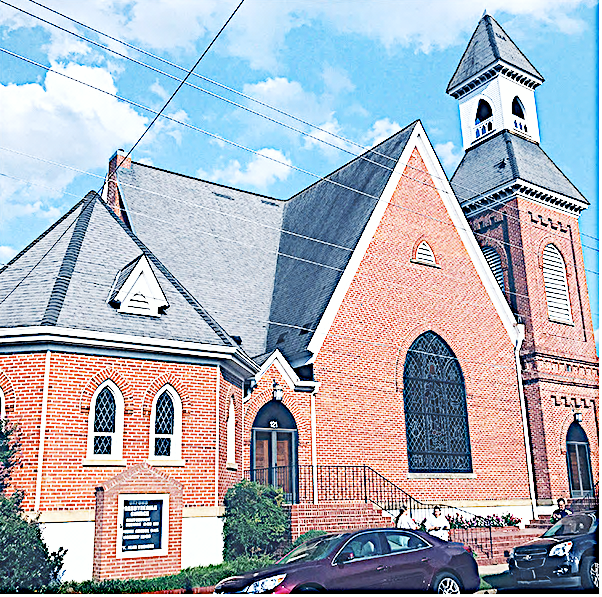
Flandreau Presbyterian Church, South Dakota, then and now