Summer 2021 Newsletter
Culture and Conflict: Presbyterian Missions to Native Americans
Dr. Nancy Midgette, professor emerita of history at Elon University, served as Senior Research Historian at the Presbyterian Heritage Center, primarily researching and designing exhibits. One of her notable projects examined “Cultures & Conflict: The 350-year History of Native Americans and Presbyterian Missions.” The exhibit is wide-ranging, with information about missions across time and across the country, addressing the deeper questions of culture and conflict. Why did some missionaries fail so miserably in their attempts to convert Native Americans to Christianity? And why did some missions succeed? European Americans generally had a hard time understanding Indian cultures, if they even tried to do so. This was, and still is, a problem for Presbyterians as well as others, and one that we have paid little attention to.
Dr. Midgette is a delightful speaker, as you can see in two Heritage Center “webinars” about the exhibit that are available on YouTube. Her father was a Presbyterian minister, and the family would spend summers at their home in Montreat, where she now lives. She loves the mountains and is a volunteer for the National Park Service at the Blue Ridge Parkway.
Some Early Missionary Attempts Among North Carolina Indian Tribes
In the earliest years, missionaries were sent out by presbyteries or synods. In the late 1750s a missionary society in Hanover Presbytery, which included North Carolina, sent Rev. John Martin to the Overhill Cherokee in what is now Tennessee. His mission ended in 1758 when the Cherokee were deciding to change sides in the French and Indian War and embark on hostilities against the British Army and the settlers. However, it is interesting that a later visitor to these same Cherokee reported that the Indians had asked Martin to leave, “as he had long plagued them with what they no ways understood.”
That same year of 1758, Hanover Presbytery sent Rev. William Richardson to the Cherokee in North Carolina, who refused to let him preach. After several months, Richardson moved to the Waxhaw region of South Carolina, where he preached to the Scots and Scotch-Irish. He was the uncle of William R. Davie, governor of North Carolina (1798-1799), who is recognized as the founder of the University of North Carolina.
In the mid-eighteenth century numbers of missionaries were sent by northern synods to North Carolina to itinerate for a certain length of time. The province was rapidly being settled by immigrants from Scotland and Northern Ireland, but there were no Presbyterian ministers or organized congregations. Often the missionaries were licensed to preach but not yet ordained, such as Hugh McAden, sent by the Synod of New York. During ten months in 1755 and 1756, he visited about 50 communities across North Carolina. His journal was summarized by William Foote in his Sketches of North Carolina, but the original has been lost.
Minutes of each meeting of the Synod of the Carolinas from 1788 to 1812 are summarized in A History of the Sources and Development of Presbyterianism in North Carolina by Harold J. Dudley, published this year by our society. They include reports of many missionary journeys within the synod and beyond, sponsored by Synod’s Commission on Domestic Missions. Dr. James Hall made many visits to the Natchez region in southern Mississippi, but it is not reported that he preached to any Native Americans there.
The synod did, however, sponsor a mission to the Catawba Indians who traditionally lived along the Catawba River valley in North and South Carolina. This agricultural tribe had been large and powerful, but was decimated by attacks of smallpox. They had sided with the English against their traditional enemies, the Cherokee. By the end of the 18th century only a few hundred lived on a small reservation in South Carolina. Apparently there was a school for the Indians before 1803, when Synod sent Rev. William C. Davis to superintend their school, to be assisted by Rev. James Wallis. Davis was pastor of Olney Church at the time, south of Gastonia. By 1805, however, the Commission on Domestic Missions reported to Synod that the school among the Catawbas flourished for a time, but the Indians “grew weary” of the instruction. Besides, there had been little preaching to them, and the endeavor was expensive. Synod seems to have dropped its support by 1808.
Apparently a connection with Presbyterians continued however. About 1790 Six Mile Creek Presbyterian Church was organized near the Wagon Road in what had been Catawba Indian country along the undefined border, now Lancaster County, S.C. Likely the school was near there. When a new building for the church was constructed in 1835, the small sanctuary was flanked by two sheds, one for seating black worshippers, and the other for Catawbas. In 1963 the church membership was transferred to Banks Presbyterian Church in Marvin, S.C.
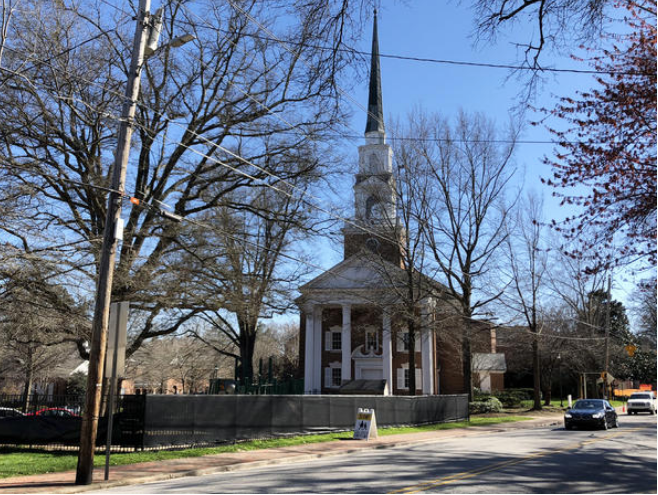
Benjamin P. Harris, Catawba Indian, 1898, with bow and arrow and heron
The missionary reports to Synod end in 1810, when the General Assembly assumed jurisdiction over foreign and domestic missions. Also in 1810 the American Board of Commissioners for Foreign Missions was established in Massachusetts. Congregationalist in origin, the Presbyterian, Dutch Reformed, and German Reformed denominations soon began to send out their own missionaries under the supervision of the American Board. The Presbyterian Board of Foreign Missions was founded by the General Assembly (Old School) in 1837 but remained a benevolent society until 1862.
The information here about Rev. John Martin came from Ernest Trice Thompson, Presbyterians in the South, Vol. I, published in 1963. His three volumes are a wonderful resource, although he unfortunately referred to Indians as “the Red Men.” Most of the remaining information came from Harold J. Dudley, A History of the Sources and Development of Presbyterianism in North Carolina, published by our society this year. Some of course, is from various sources on the Internet.
RESEARCH NOTE
The Presbyterian Heritage Center has been creating a very helpful list of short biographies of all Presbyterian foreign missionaries, including those to Native Americans, along with bibliographic references. The list is not yet complete but they are adding to it. Their new website is accidentally missing a link to the bios, but until that is fixed, here is the Google link: https://www.phcmontreat.org/Bios-missionaries-index.htm
Presbyterian Heritage Center to House the Society’s Records
The North Carolina Presbyterian Historical Society, as an historical organization, has a lot of historical records. Organized in April 1964 since then the society has hosted many outstanding speakers on Presbyterian history, conducted tours of churches and historic sites in most parts of this state and some in neighboring states; and has encouraged the writing and preservation of Presbyterian history through awards for excellence. The tangible records of these activities include minutes, treasurer’s reports, officers’ correspondence, lists of members and some obituaries, newsletters, programs from meetings, and “Tour Books" containing brief histories of each of the places we have visited. Also in the collection are historical addresses on aspects of Presbyterian history; church histories large and small, usually given to the society when we were visiting the church; photographs of churches and meetings; chronological and alphabetical lists of churches in North Carolina; and miscellaneous material relating to Presbyterian history. The records fill twelve manuscript boxes that take up about four feet of shelf space. A finding aid has been prepared, listing the contents of the boxes.
Some years ago the Board of Directors decided that the society’s records should go to the Presbyterian Heritage Center at Montreat. There they can be housed in humidity-controlled stacks and will be available to researchers. The papers were originally arranged and described in 2008-2009, and this year materials were added and the finding aid updated to 2021. Duplicates of the minutes and other important records will be kept by present and future officers. Newsletters back to 2005 are available on our website now (www.ncphsociety.org). We may scan earlier newsletters and make them available online too, but we do not have a complete run of them. It would also be useful to scan all the tour books with their summaries of church histories, but that will be a larger project.
The Presbyterian Heritage Center
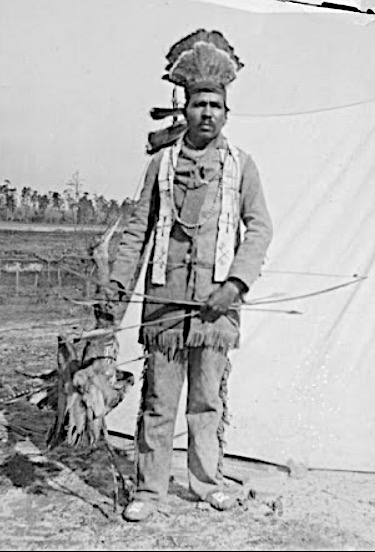
The Presbyterian Heritage Center then opened its doors in 2008, with a mission of maintaining a center for Presbyterian history on the campus of Montreat. They have a sizable library including many published church histories from all over the country. Their collections include personal papers and artifacts from missionaries in many parts of the world, and personal papers of ministers, including sermons. They also have the historical records and many personal papers, photographs, etc., relating to the Mountain Retreat Center, or Montreat. Their staff are all part-time, but they love their work. Researchers are always welcome and are aided in their research by staff. In the off-season their posted hours of being open are short, but staff members are always there. A call or an email before you visit will have them ready to assist you for as long as needed.
Exhibitions in the PHC museum area serve to educate hundreds of summer visitors on aspects of Presbyterian history. Current exhibitions include Culture and Conflict: 350 years of Presbyterian and Congregational missions to Native Americans; Who Are Presbyterians? (from their Reformation 500 exhibit); Missions to Central America and the Caribbean; The Centennial of Women’s Suffrage; and Archaeology in the Middle East. Lately they have filmed webinars discussing some of these topics, available on YouTube. Two of these webinars feature our speaker, Dr. Nancy Midgette, talking about Presbyterian missions to Native Americans in the Southeast and in other parts of the U.S.
A series of national conferences hosted by the PHC have also been highly successful. The first was on the 500th anniversary of the Protestant Reformation. Then in 2019 the conference on C.S. Lewis and the Inklings drew over 600 people.
History Awards Given by NCPHS
Since 1968, the NC Presbyterian Historical Society has given awards in recognition of well researched books or projects on some part of Presbyterian history in North Carolina – usually for books, but sometimes for history made public in a different way, such as an excellent historical room, a theatrical production, or detailed research on an historic cemetery. These projects were all brought to our attention. Doubtless there have been many that we did not know about.
Last year the board voted to continue giving certificates of recognition and appreciation, but in some cases, if a submitted history or project meets the criteria for excellence, a monetary award of $100 will be given. Awards are given for works published or completed in the previous year or in a recent year.
Harold J. Dudley’s History of Presbyterianism in North Carolina
A History of the Sources and Development of Presbyterianism in North Carolina is quite a mouthful of a title! But the book, published by the Society this year, lives up to it. It is jam-packed with interesting information on the earliest Presbyterian and Reformed settlers in North Carolina; on all the early ministers visiting or working in North Carolina; and on all the early churches and congregations mentioned in the records, even if they did not survive very long. Also discussed are the issues that concerned the denomination during the early years, such as the shortage of ministers and the need for higher education; alarm about heresies such as Arminianism, embraced by the Methodists, Deism, and Universalism; divisions between Patriots and Loyalists; and division over “revivalism” during the Second Great Awakening of the 1790s and early 1800s. The main part of the book ends in 1813 when the Synod of North Carolina replaced the Synod of the Carolinas.
The last chapter, however, is an overview of the history of the Synod of North Carolina from 1813 to 1983. It deals with the history by topic, such as home and foreign missions, effects of the Civil War, the growing participation of women, development of Christian Education, establishing institutions of higher education, and stands on social issues.
The appendices are also very helpful. Appendix I is a chronological list of all Presbyterian and early Reformed ministers who visited or stayed in North Carolina. Appendix II is the same names listed alphabetically with some biographical information about each. Appendix III is a chronological listing of congregations or organized churches within the bounds of the Synod of North Carolina to 1967. It does not include churches in the western counties that were in the Synod of Appalachia. Appendix IV is an alphabetical list of churches in the Synod of NC that had been dissolved. Appendix V is a chronological list of the developing presbyteries, synods, and general assemblies of which North Carolina was a part. Appendix VI lists the moderators and stated clerks of the Synod of the Carolinas and the Synod of North Carolina. The extensive bibliography includes all the books, articles, and church histories referenced by Dr. Dudley.