Winter 2014 Newsletter
A Golden Tour for Our 50th Birthday: Eastern Guilford and Alamance
Peacehaven Community Farm
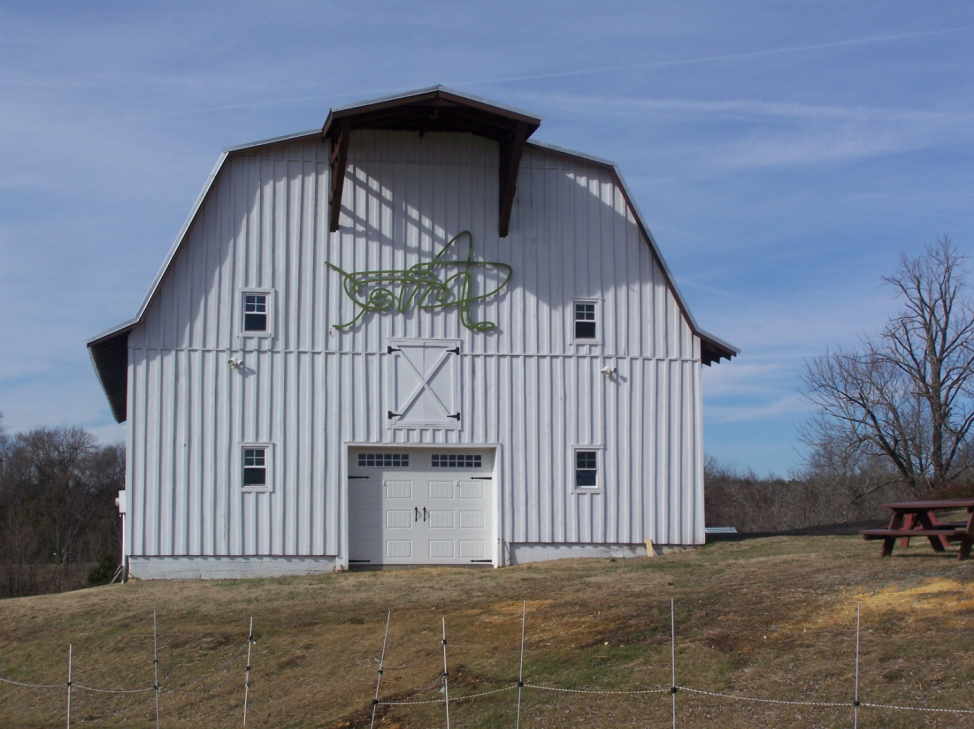
Peacehaven Community Farm barn.
Peacehaven Community Farm near the village of Whitsett in eastern Guilford County is an 89-acre facility, and its name wonderfully describes the setting and its purpose. Inspired by the L’Arche communities in Europe, Peacehaven was established to provide a safe and loving community for special-needs adults where their gifts are recognized. The farm also gives opportunities for others in the area to develop relationships with the residents and staff. The beautiful rolling hills on the banks of Lake Mackintosh provide organic gardens, beautiful woodlands, and verdant pastures – everything that a sustainable and earth-friendly farm must have.
One of the founders and director, Rev. Buck Cochran, is a former associate pastor at First Presbyterian, Greensboro.
Fifty Years Ago
On April 10, 1964, the North Carolina Presbyterian Historical Society was organized by the Synod of North Carolina’s Permanent Committee on Historical Matters. This took place at the Synod Office in Raleigh, with 13 members present. After electing officers, they viewed a motion picture that had been made of Synod’s sesquicentennial meeting in 1963. They also heard a recording of a Gaelic song and the recitation of the Twenty-Third Psalm in Gaelic by the Rev. James MacKenzie. Their first project was to be the publication of Foote’s Sketches of North Carolina, 3rd edition, edited and indexed by Dr. Harold J. Dudley.
Dr. Dudley was General Secretary and Stated Clerk of Synod, and was the force behind the formation of the society. He truly loved the history of the Presbyterian Church and wanted everyone to appreciate and preserve that history. Since he was also editor of the North Carolina Presbyterian News, there were frequent articles on the society and appeals for church histories and preservation of artifacts, photos, and books.
The next year 73 members and guests met at White Memorial, where they heard an address by Dr. Ernest Trice Thompson. By 1968 the society had 261 members. Thanks to Dr. Dudley and the society he started, a great many church histories have been written, historical rooms built, and anniversaries celebrated.
Bethel Presbyterian Church
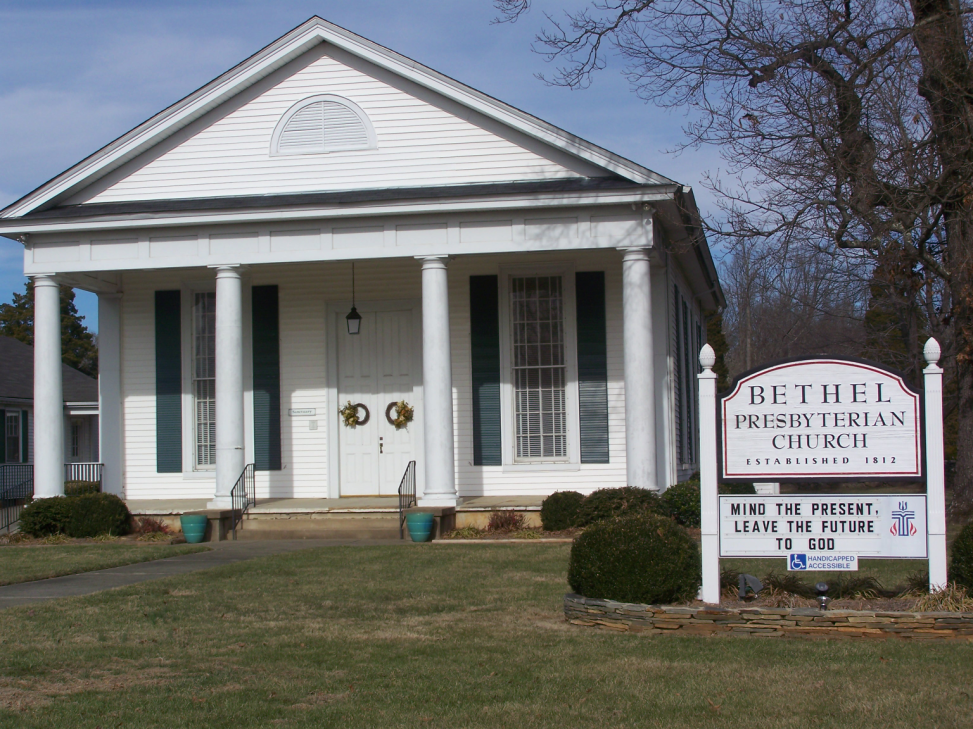
Bethel Presbyterian Church. By Sam Martin.
Bethel Presbyterian Church was founded in 1812, and is one of the older churches in Guilford County. The 1868 building is a beautiful example of nineteenth-century architecture with later construction coordinating nicely with the original sanctuary. The campus also is home to an extensive cemetery with graves dating back to the early 1800s, and a Session Meeting House.
The Charlotte Hawkins Brown Historic Site
The Charlotte Hawkins Brown Historic Site is located in the nearby community of Sedalia. Charlotte Hawkins was born in Henderson, N. C., in 1883 and moved with her family to Cambridge, Mass., at an early age. She became acquainted with Alice Freeman Palmer, President of Wellesley College, who became an advisor, counselor, mentor, and benefactor. In 1902 Charlotte Hawkins Brown opened the Palmer Memorial Institute, named for her friend. It quickly became one of the more highly regarded preparatory schools for African-American children in the nation. The site contains houses, classrooms, and dormitories, as well as a museum and visitor’s center. In addition to the story of Charlotte Hawkins Brown, the site tells much about social history of the early twentieth century and the development of women’s rights and civil rights in an era of drastic change.
Springwood Presbyterian Church
Springwood Presbyterian Church was established in 1868, following the Civil War. The local German Reformed congregation was split by hard feelings when the abolitionist minister and his followers tried to incorporate the many returning Confederate veterans, who had their own personal needs. The area had suffered greatly in the time prior to and during the war, and when the men returned from conflict, they were physically and mentally changed by their experiences. Orange Presbytery established the church, and a long history of local and world-wide missions remain a vital part of the congregation almost a century and a half later.
Stony Creek Presbyterian Church
Stony Creek Presbyterian Church was founded in 1775, and is one of the oldest continuing congregations in North Carolina. Prior to its formal recognition by Orange Presbytery, Rev. John Debow was holding camp meeting revival services on the site as early as 1770. Located in the beautiful rolling hills of north-central Alamance County, Stony Creek has a historic cemetery dating back to the eighteenth century. An old Session House was located in the southeast corner of the cemetery until 1923 when expansion of the burying ground claimed the building. The beautiful church grounds also house a bell saved from the previous building that burned in 1956.
First Presbyterian Church of Burlington
First Presbyterian Church of Burlington was founded in 1879 by a committee of Orange Presbytery. The first Presbyterian services pre-dated the city of Burlington when a Presbyterian minister from Mebane began holding services in the Company Shops community. A building used for the services belonged to the North Carolina Railroad, and Methodists, Baptists, and Lutherans joined the Presbyterians in the union services. First Presbyterian has responded to the needs of the community and conducts numerous programs that meet the needs of those less fortunate, the young people in need of daycare, the elderly, the hungry, and many others. The beautiful buildings cover a large campus on the edge of downtown, and the church continues to be a beacon for Christ in Burlington.